
What a pleasure to have support within minutes. Brillant, accurate answer, and solved the question. Thanks to the Formidable Team. Eric


Last updated on August 12, 2026 by Formidable Team
How to Add a Contact Form in a Footer in WordPress
Wondering why your contact form barely gets used? Most visitors never click through to your "Contact" page, so a form tucked away there quietly loses you messages and potential leads. Putting it in your footer or sidebar fixes that, and with Formidable Forms you can have one live in 5 minutes, no code required.

Approximate read time: 8 minutes
Upgrade your WordPress site with powerful, flexible forms.
Why put your contact form in the sidebar or footer
Conversion math is simple: a form people don't see doesn't get filled out. Burying your only contact form on a page called /contact means visitors have to go looking, and most won't.
A sidebar widget sits next to every blog post you publish, and a footer form appears at the bottom of every page on your site. Either way, the form follows the reader instead of waiting for the reader to find it.
The sidebar is best when you want the form visible while people read. The footer is best when you want it available without competing for attention. Many sites use both, with a shorter form in the sidebar (name, email, message) and the full version on the dedicated contact page.
From Idea to Reality in Minutes. Build Powerful Forms, Dashboards, Apps and More.
Formidable Forms makes advanced site building simple. Launch forms, directories, dashboards, and custom WordPress apps faster than ever before.
What you'll need
- A WordPress site you can log in to as admin
- Formidable Forms installed and activated (Formidable Forms Lite is all you need for a basic form)
We reach for Formidable Forms here for one practical reason: it ships its own widget block, so you don't have to bolt a separate sidebar widget plugin onto your contact form to display it. It's also a tool the WordPress community already trusts, with more than 300,000 active installations and a 4.8 out of 5 rating across over 1,300 reviews.
With Formidable Forms ready to go, let's build the form in 4 steps.
Step 1: Build the contact form
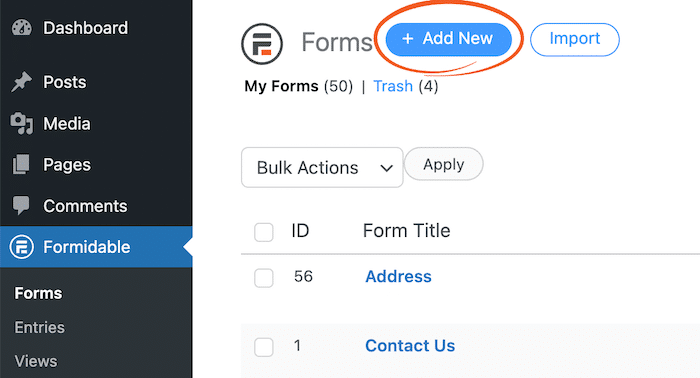
From your WordPress dashboard, go to Formidable → Forms → Add New.
You can start from a Blank Form or pick the Contact Us template, which already has the fields most contact forms need. The template is faster, so use it.
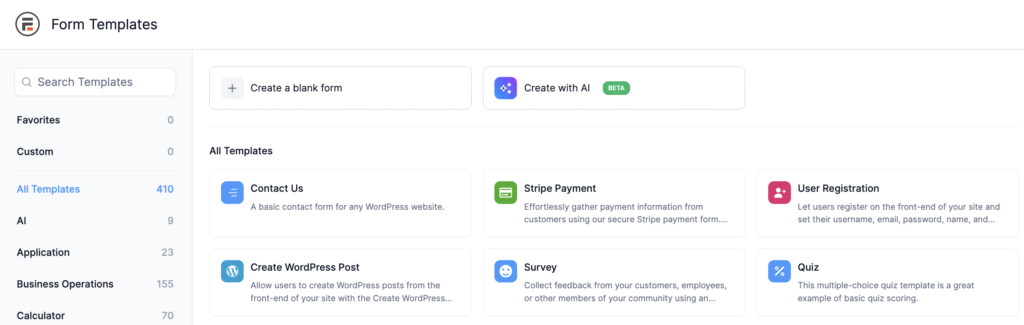
Give your form a name and click Create to open the drag and drop builder.
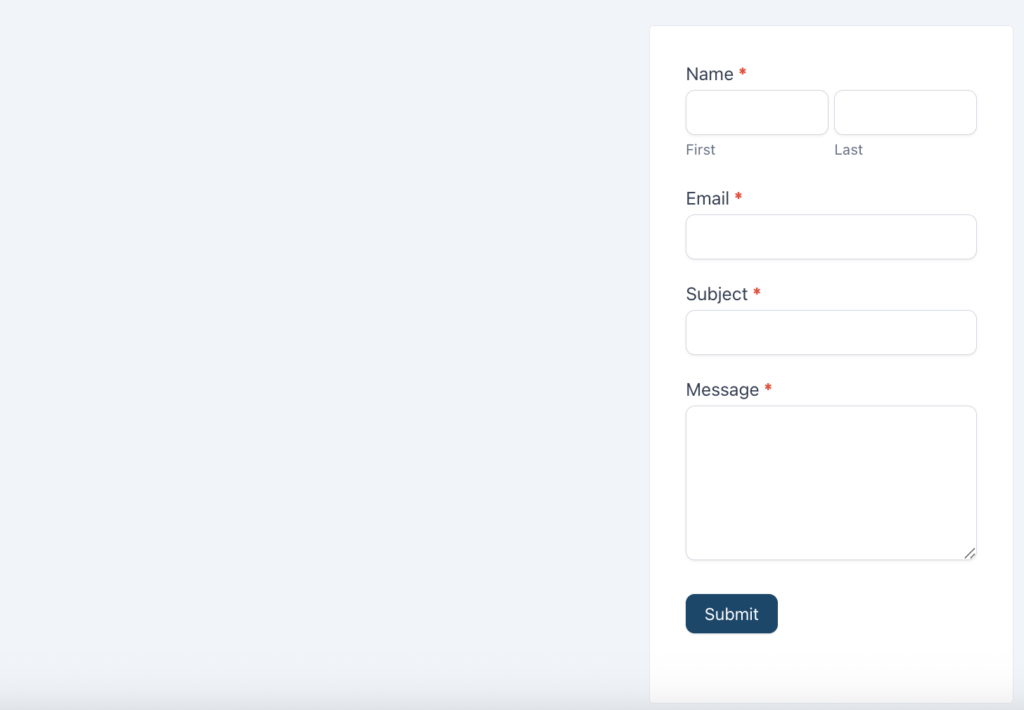
For a sidebar form, keep it short. Sidebar space is narrow, and a wall of fields scrolling down next to your blog post is a tough sell. Three fields usually do it: a Name field, an Email field, and a Paragraph field labeled Message.
If you're putting the form in the footer, you have a little more room, so a Single Line Text field labeled Subject is fine to add.
Drag fields in from the panel on the left, and rename a label by clicking it.
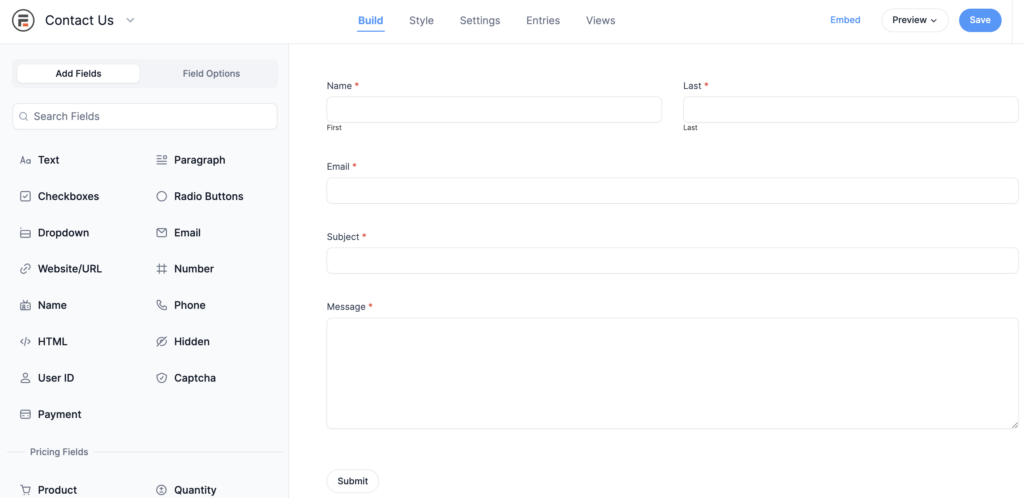
When the form looks the way you want, click Update to save.
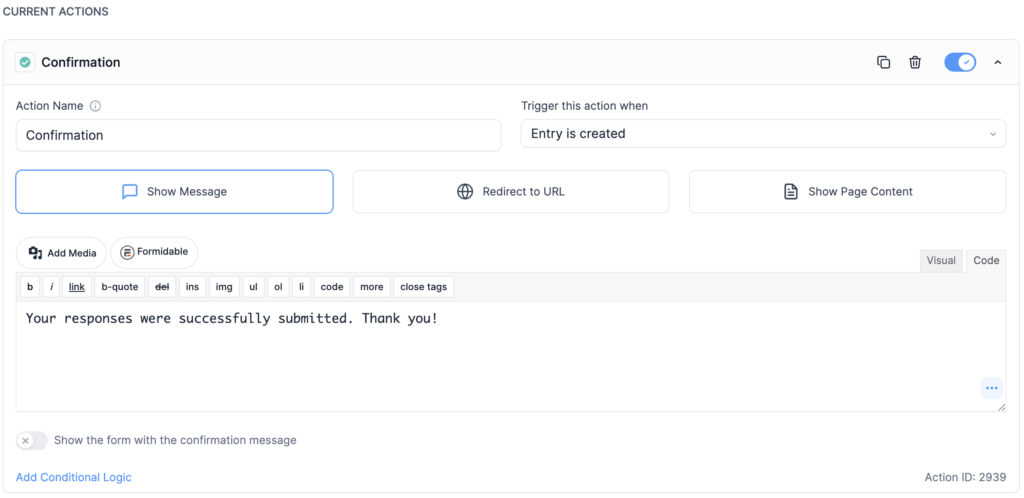
One thing worth setting up before you move on is what happens after someone submits.
Open the Settings → Actions and Notifications tab and confirm an email notification goes to you on each submission.
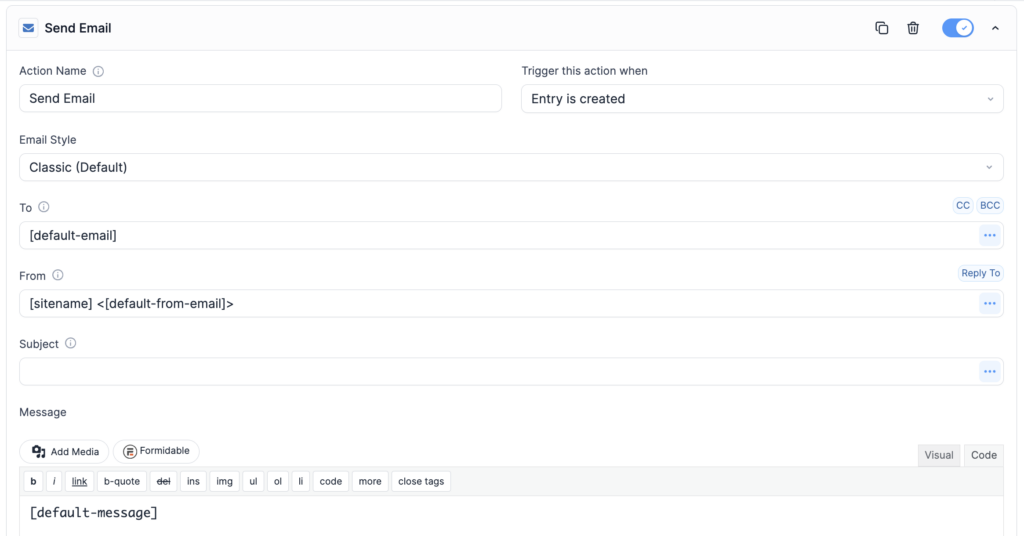
You can also add a confirmation email to the visitor so they know their message went through. Neither is strictly required for the form to work, but skipping them means submissions sit in your database with nobody knowing they exist.
Step 2: Add the form to your sidebar
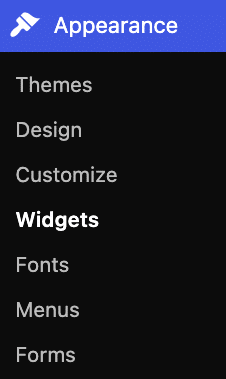
In your WordPress dashboard, go to Appearance → Widgets. This is where every widget area on your site is managed: sidebars, footers, and any extra widgetized regions your theme exposes.
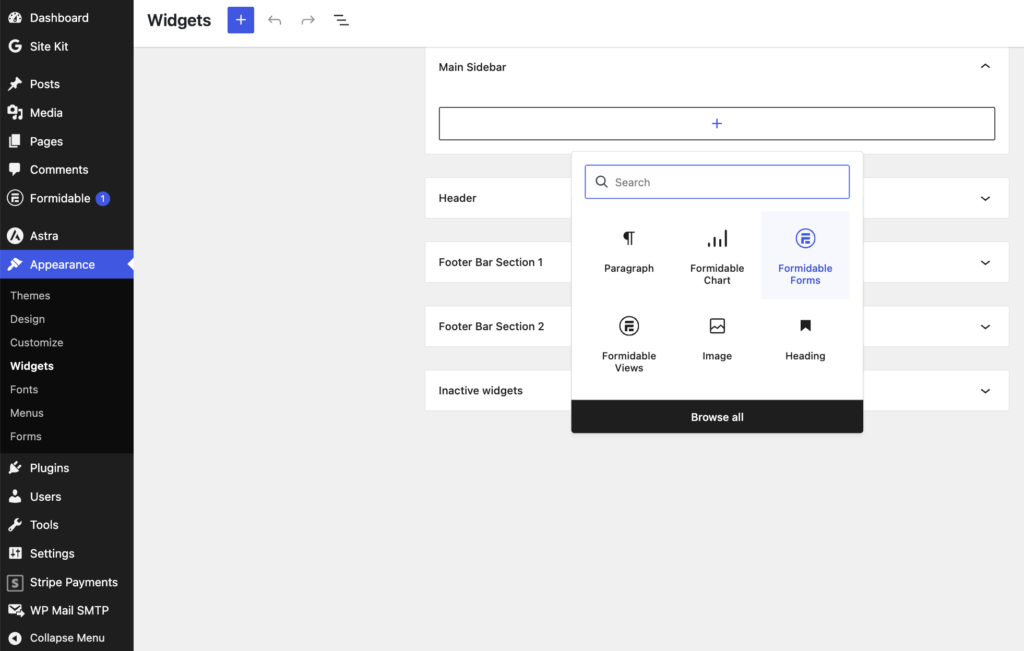
Find the Blog Sidebar (or whatever your theme calls the main sidebar) and click the + button to add a block.
Search for Formidable Forms and add the block. A dropdown appears with every form you've built, so pick your new contact form.
Give the widget a title in the block settings, something like Contact us or Drop us a line. That title shows up above the form on the front end, so visitors know what they're looking at.
Click Update at the top of the widgets screen. The form is live in your sidebar.
Want it in the footer instead, or in addition
The process is identical. Scroll to the Footer widget area on the same Widgets screen, add a Formidable Forms block, pick your form, and click Update. Your footer form will now appear at the bottom of every page that uses your theme's footer, and it looks right no matter your setup, whether you're on a theme like Astra or a page builder like Elementor.
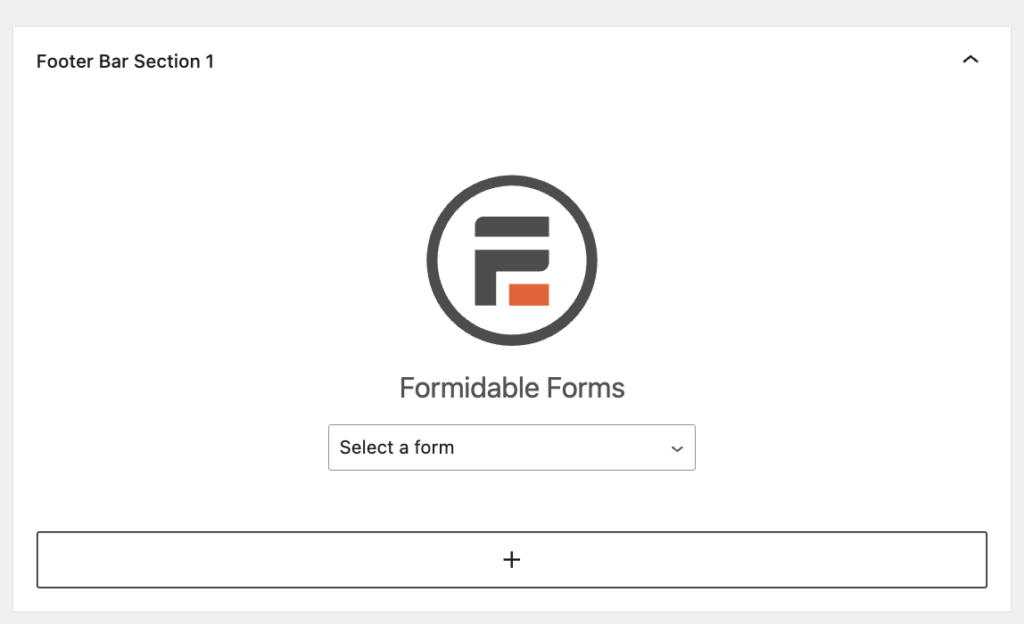
Some themes use a block-based footer managed through the Site Editor instead of the Widgets screen.
If you don't see a Footer area under Appearance → Widgets, go to Appearance → Editor, open the footer template, and add the Formidable Forms block there.
Step 3: Add a newsletter checkbox (optional)
Visitors who care enough to send you a message are also visitors who might want to hear from you again. A single checkbox at the bottom of the form is the lowest-effort way to grow your email list without building a separate signup form.
Open the form in the builder and drag a Checkbox field below the message.
Set the option to something honest, like Send me occasional updates or Add me to the newsletter, with a single option, unchecked by default.
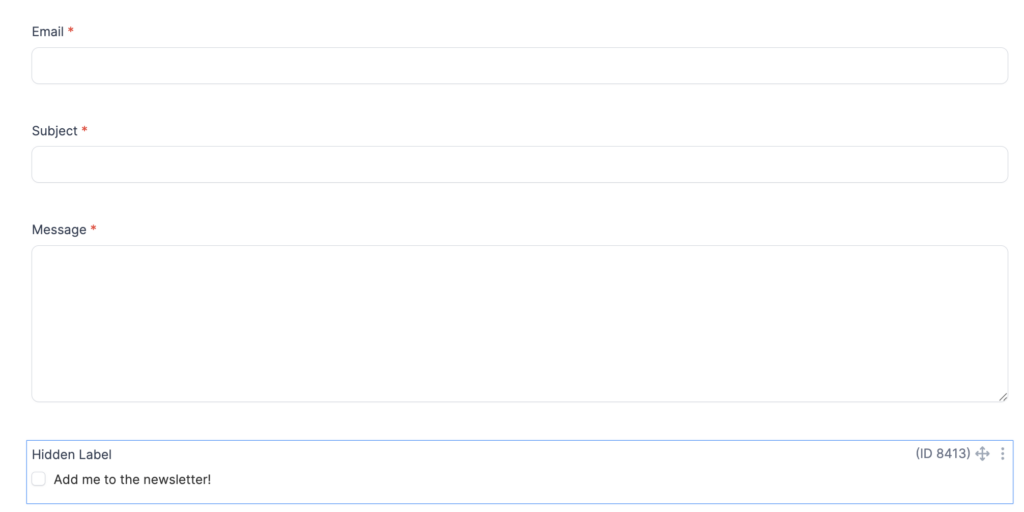
If you're using an email service like Mailchimp or Constant Contact, Formidable Forms Pro has built-in integrations that subscribe people automatically when the box is ticked.
With Formidable Forms Lite, you can route the submission to a list manually based on the checkbox state. Either way, the form now does two jobs at once: it collects messages and grows your list.
Step 4: Publish and test your contact form
If you've placed the form in your widget area as described, it's already showing on the front end, so the last job is to confirm it works.
Fill out the form yourself from an incognito window, then check that:
- The submission lands in Formidable → Entries
- The notification email reaches your inbox
- The confirmation message or redirect behaves the way you set it up in the Confirmation action
- The newsletter checkbox, if you added one, gets recorded with the entry
If anything's off, you can fix it in the form's Settings → Actions and Notifications tab without touching the widget area. The form on the front end pulls live from the form ID, so any change you make in the builder shows up immediately.

Using a shortcode instead of the widget
If your theme doesn't expose a widget area where you want the form, or you'd rather drop the form into a specific spot in a page or post, every Formidable Forms form has a shortcode. Find it under Formidable → Forms, in the ID column.
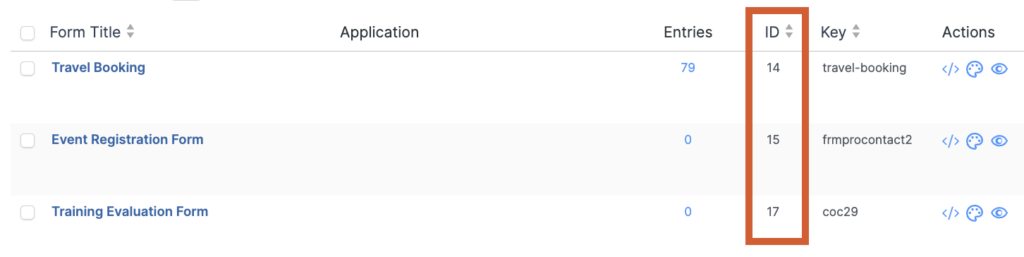
Paste Please select a valid form into any post, page, or custom HTML block. Same form, same submissions, different placement. Useful if you want one form to live in the sidebar on the blog and inside a section of your homepage at the same time.
What your contact form can actually do
Most contact forms are write-only. Submissions land in your inbox, you reply, and that's the end of it. Formidable Forms Pro turns those submissions into something you can act on.
- Conditional logic. Show or hide fields based on what someone selects. Pick "Billing question" and the form asks for an order number. Pick "Partnership" and it asks for a company name.
- Multi-step forms. Break a longer form into steps with a progress bar, for better completion rates and less form fatigue.
- Email service integrations. Mailchimp, Constant Contact, ActiveCampaign, and others, with submissions synced automatically.
- Payments. If the contact form is really an order form in disguise, plug in Stripe, PayPal, or Authorize.Net.
- Formidable Views. Display submissions as a searchable directory, table, or dashboard anywhere on the site. Useful when "contact" is really "submit a tip," "request a quote," or "apply to join."

None of that is required to run a basic sidebar contact form. It's there when you outgrow the basic one.
A small change that keeps paying off
A WordPress sidebar contact form is one of those small site changes that quietly pays off for a long time. It removes a step between visitors and you, it works on every page it appears on, and it costs nothing to set up.
Build the form, drop the block into the widget area, and test it once. If you want to make it look even sharper afterward, see our visual form styler. When you're ready, try Formidable Forms free and you'll have a contact form live in your sidebar before you finish your coffee.
- Do I need a separate contact form widget plugin for WordPress?
-
No. Formidable Forms includes its own widget block, so there's no need to install a sidebar widget plugin on top of it. One plugin, one form, one widget area, done.
- Can I put different contact forms in different sidebars?
-
Yes. Build as many forms as you want. Each one has a unique ID, and the widget block lets you pick which form to display per widget area. A streamlined three-field form in the blog sidebar and a more detailed version on the dedicated contact page is a common setup.
- Will the form match my theme?
-
Formidable Forms forms inherit styling from your theme by default, so they tend to look right out of the box. If you want to push it further, the styler under Formidable → Styles lets you change colors, fonts, spacing, and field shapes without writing CSS. A Pro license adds full style control if you want pixel-level adjustments.
- Does this work with page builders like Elementor or block themes like Astra?
-
Yes. The Formidable Forms block works in the block editor, in any widget area, and inside Elementor (there's a dedicated Formidable Forms widget for it). For block themes that use the Site Editor instead of the classic Widgets screen, add the block directly to the sidebar or footer template part.
- Can I add a contact form to the footer instead of the sidebar?
-
Yes. The steps are identical: go to Appearance → Widgets, find the Footer area, add the Formidable Forms block, and pick your form. If your theme uses a block-based footer, do it through Appearance → Editor instead.
This article may contain affiliate links. Once in a while, we earn commissions from those links. But we only recommend products we like, with or without commissions.