
What a pleasure to have support within minutes. Brillant, accurate answer, and solved the question. Thanks to the Formidable Team. Eric


Last updated on August 12, 2026 by Formidable Team
What is Honeypot Anti-Spam? [And How To Use It!]
Tired of spam bots burying real leads under junk submissions? Honeypot anti-spam catches them invisibly, with no CAPTCHA for your real visitors. We'll show you how to turn it on in WordPress with Formidable Forms, then stack on extra defenses like denylist validation and StopForumSpam when you need them.

Approximate read time: 5 minutes
Upgrade your WordPress site with powerful, flexible forms.
What is honeypot anti-spam?
A honeypot is a hidden form field that real visitors never see. Bots see it, because bots read the raw HTML and try to fill in every input they find. Humans don't, because the field is hidden with CSS or JavaScript.
The logic is simple. If that hidden field gets filled out, the submission came from a bot, and your form rejects it. If it stays empty, the submission is probably from a human.
Think of it like a decoy doorknob in a pitch-black hallway. A person who can see the room walks right past it. A bot feeling around in the dark grabs every knob it finds, including the fake one, and gives itself away.
CAPTCHA is the challenge test that asks visitors to prove they're human before submitting. Honeypot's big advantage over it is that honeypot never asks your real visitors to do anything. No puzzles, no image grids, no "I am not a robot" checkbox. The defense is invisible to the people you actually want to hear from.
From Idea to Reality in Minutes. Build Powerful Forms, Dashboards, Apps and More.
Formidable Forms makes advanced site building simple. Launch forms, directories, dashboards, and custom WordPress apps faster than ever before.
How honeypot anti-spam works
When a form loads on your page, the honeypot field loads with it, hidden from view. A regular visitor fills out the visible fields, clicks submit, and never knows the hidden field existed.
A bot works differently. It parses the HTML, finds every input, and tries to fill them all in to maximize its chances of getting through. When it fills the honeypot, the form silently flags the submission as spam and blocks it.
Nothing pops up. Nothing slows down. The bot moves on thinking it succeeded, and you never see the entry.
How to set up honeypot anti-spam on your WordPress forms
You're going to use Formidable Forms for this. It's the WordPress form builder with honeypot anti-spam baked in, plus a stack of other anti-spam tools you can layer on top if you need them. Formidable Forms Lite is free on WordPress.org, and the honeypot feature works in every version.

Step 1: install Formidable Forms
In your WordPress dashboard, go to Plugins → Add New, search for Formidable Forms, and click Install Now, then Activate.
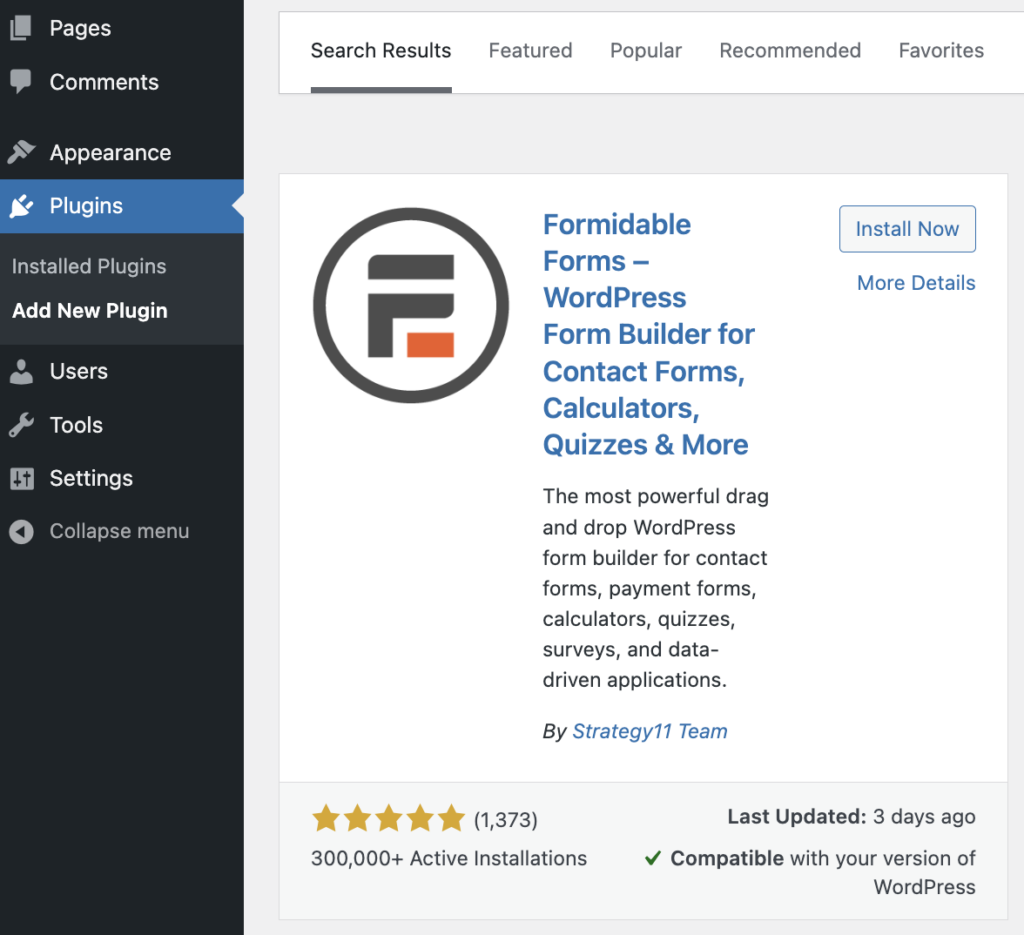
If you'd rather start from Formidable Forms Pro to unlock templates and conditional logic, you can download it from your account dashboard and upload it the same way.

Step 2: create a form
Go to Formidable → Forms and click Add New.
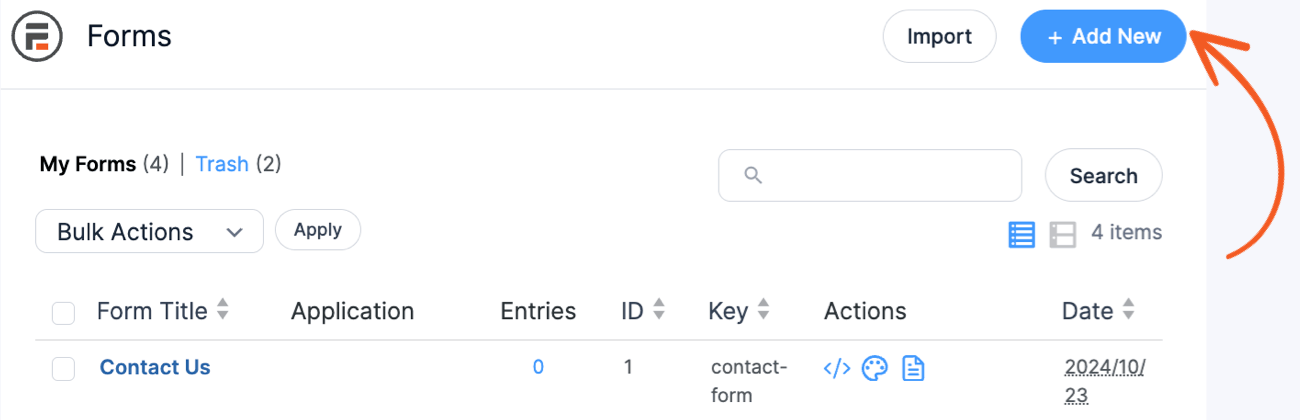
You'll see 2 paths. Pre-built templates require Formidable Forms Pro and give you a head start on things like contact forms, registration forms, and order forms. Otherwise, click Create a blank form and you're in the drag and drop builder.
Drag whatever fields you need onto the canvas. Name, Email, Text Area, Radio Buttons, whatever the form calls for.
Click Save in the top right and give the form a name.
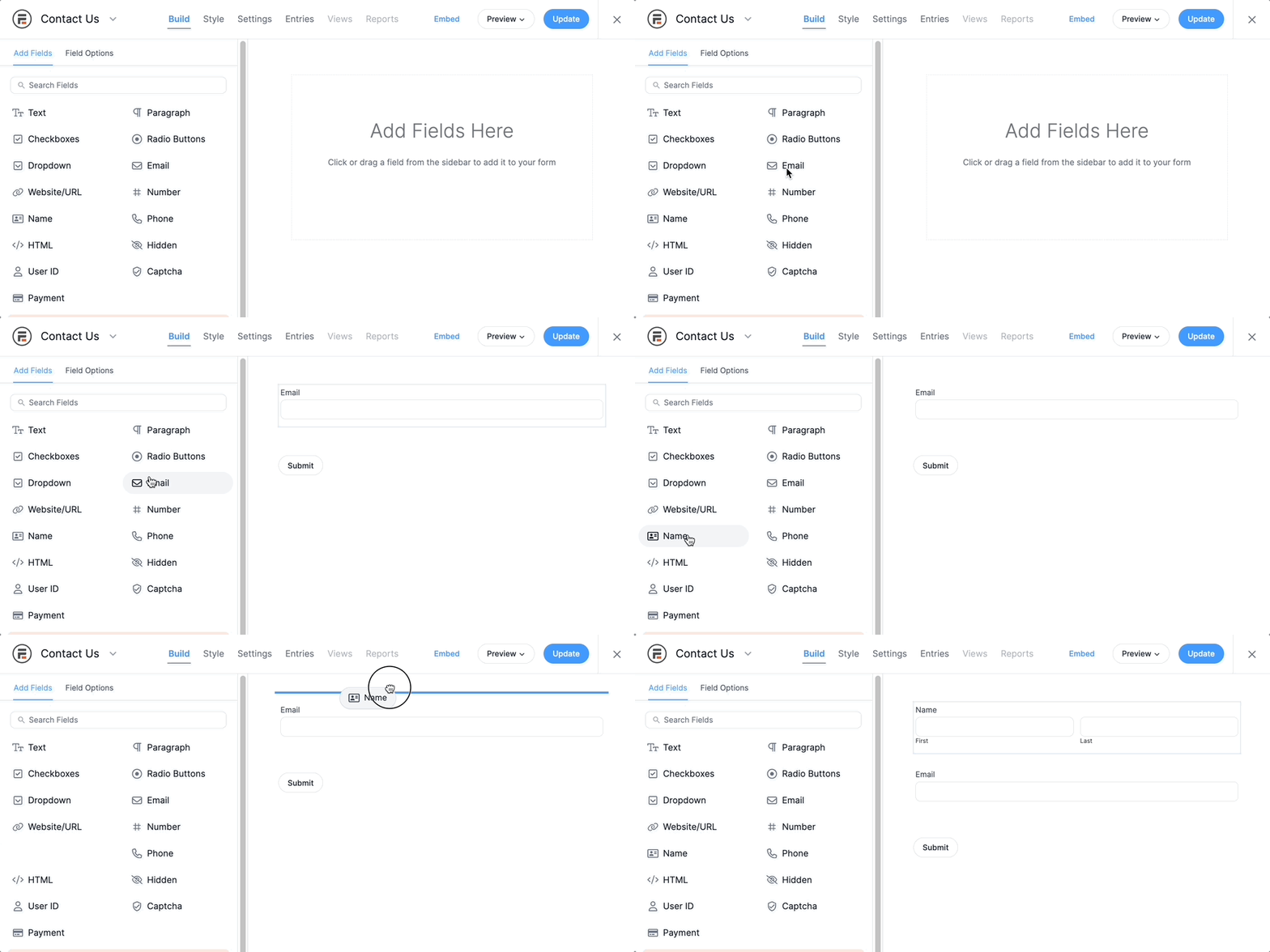
That's it. Honeypot is already turned on. You don't have to enable anything. Every form Formidable Forms creates ships with the trap in place from the moment you save it.
Step 3: publish the form
Go to the page or post where you want the form to live. Add a new block, search for Formidable Forms, and select it. Pick your form from the dropdown, update the page, and you're done.

The form is live, the honeypot is working, and bots are walking into it without realizing it.
Try Formidable Forms free and get spam protection that's on from the first form you build, the same setup trusted on over 300,000 WordPress sites.
Layer on more protection if you need it
Honeypot catches a lot of bots. But spam attacks evolve, and some operators write scripts that skip hidden fields on purpose. If you're still seeing junk submissions after honeypot is in place, Formidable Forms gives you a few more tools you can stack on top.
Global anti-spam settings
Go to Formidable → Global Settings → Captcha/Spam.
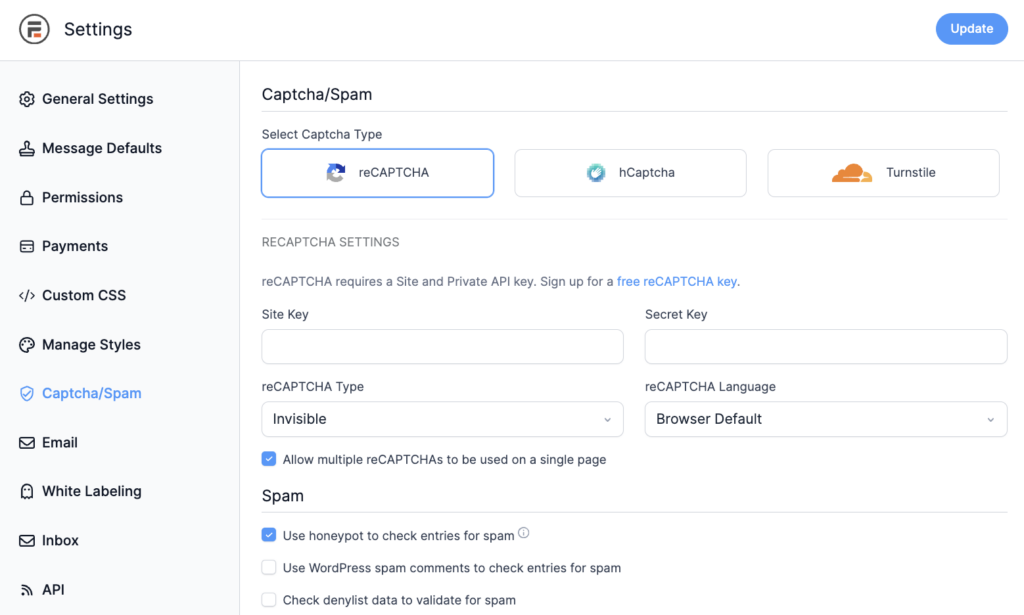
From here you can:
- Confirm honeypot is enabled (it is by default)
- Turn on denylist validation, which compares submitted text against a list of known spam phrases

- Add your own custom disallowed words, like product names spammers love to push or specific URLs that keep showing up

- Add allowed words to prevent false positives, so a legitimate submission mentioning "loan" doesn't get blocked on a financial advice form
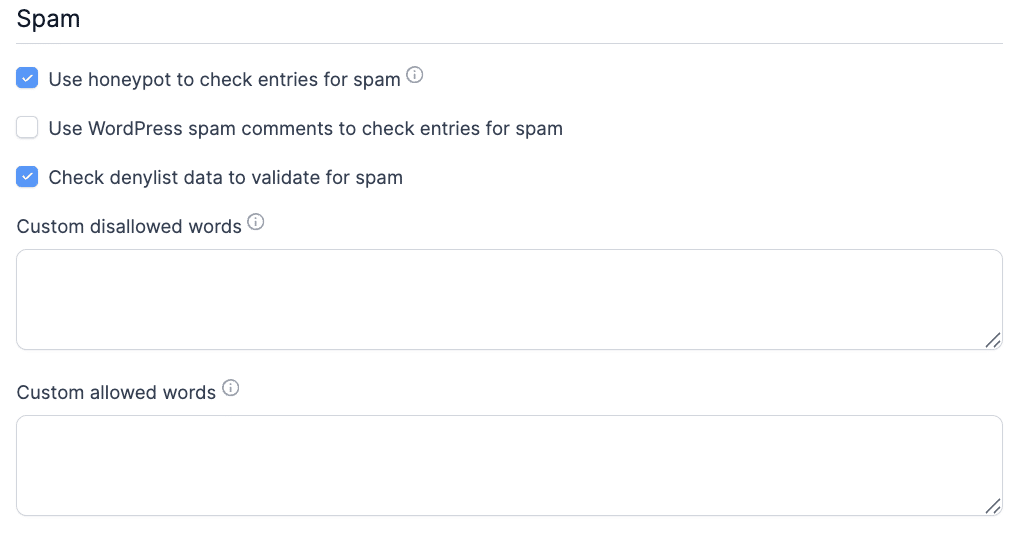

These settings apply across every form on your site, so you only set them up once.
StopForumSpam API for individual forms
For forms that get hammered hard, you can layer in a check against the StopForumSpam database, which tracks known spam sources by email and IP.
- Open the form you want to protect
- Go to the form's Settings
- Check Use StopForumSpam API to check entries for spam

- Save the form to activate it
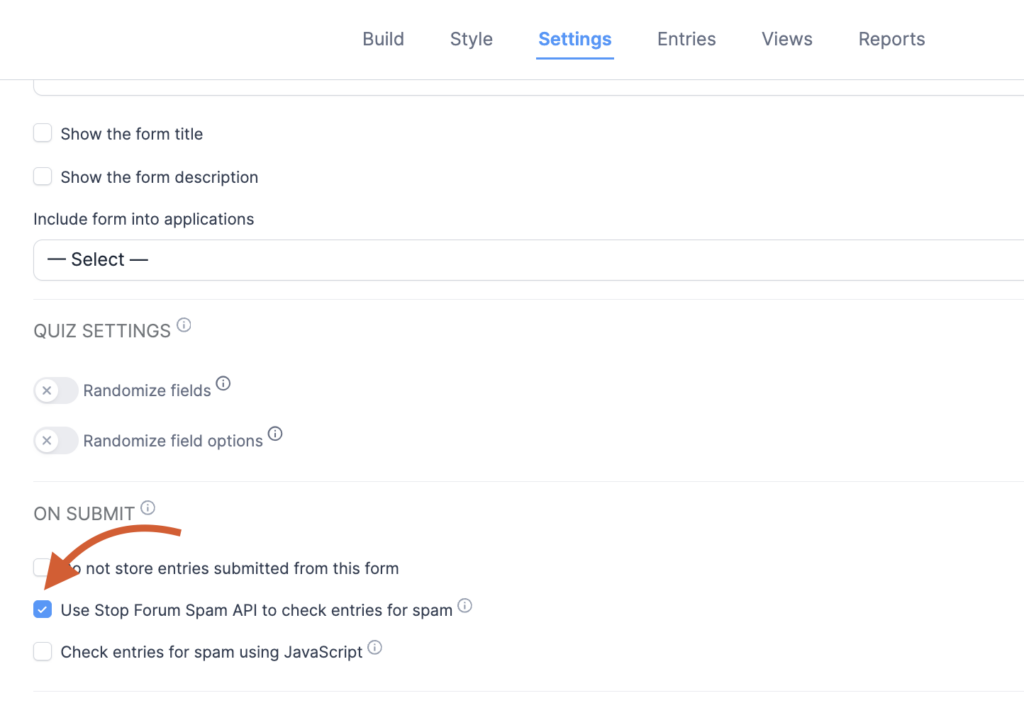
Now every submission gets cross-referenced against StopForumSpam before it lands in your entries. Known spammers get blocked automatically.
Combine layers based on what you're seeing
The right setup depends on your traffic. A low-volume contact form is fine with honeypot alone. A high-traffic lead gen form, a public registration form, or anything that's already been targeted benefits from honeypot plus denylist validation plus StopForumSpam. You can also add Cloudflare Turnstile or reCAPTCHA on top if you want a visible challenge for the worst offenders.
The point is you don't have to pick one method. You can stack them, tune them per form, and find the balance where spam stops without slowing down real users.
Block the bots, spare your visitors
Honeypot anti-spam is the cleanest way to block form bots without making your real visitors jump through hoops. With Formidable Forms, it's on by default the moment you create a form. Add denylist validation and StopForumSpam if the spam gets persistent, and you've got a quiet, layered defense that runs in the background.
Best of all, every one of those spam tools is free. And when you're ready to do more with your forms, Formidable Forms Pro adds pre-built templates, conditional logic, payments, and more.
For a closer look at everything working behind the scenes, see our guide to invisible spam protection. When you're ready, get Formidable Forms and stop spending your morning deleting spam entries.
- Does honeypot affect real users?
-
No. The honeypot field is hidden with CSS or JavaScript, so real visitors never see it and never have to interact with it. There's no extra click, no puzzle, no slowdown. They fill out the visible fields like normal and submit.
- Is honeypot better than CAPTCHA?
-
For most WordPress forms, yes. Honeypot is invisible, which means no friction for legitimate users. CAPTCHA stops bots too, but it asks every visitor to prove they're human, which costs you conversions. A lot of teams use honeypot as the default and only add CAPTCHA when honeypot alone isn't enough.
- Will honeypot stop every spam bot?
-
It stops most of them, but no single method catches everything. Sophisticated bots can be programmed to ignore hidden fields. That's why Formidable Forms gives you denylist validation, StopForumSpam integration, and the option to add CAPTCHA on top. Layer them based on how aggressive the spam gets.
- Is the honeypot feature free?
-
Yes. Honeypot anti-spam works in Formidable Forms Lite, which is free on WordPress.org. The denylist validation and StopForumSpam options are also available in the free version.
- Where do blocked spam submissions go?
-
Blocked submissions are rejected before they reach your entries, so your inbox and database stay clean. Detected spam keywords are stored separately so you can review what's being caught and adjust your disallowed words list if needed.
This article may contain affiliate links. Once in a while, we earn commissions from those links. But we only recommend products we like, with or without commissions.