To view, edit, add, and delete entries on the back-end of your site, go into your form and click the Entries tab. To manage the entries of a different form, click the arrow next to the form name at the top of the page and choose that form.
Upgrade your WordPress site with powerful, flexible forms.
Add a New Entry
You can add new entries at the back end of your site. This gives you complete control over the information submitted, including the Entry Key. When the form has a User ID field, you can choose the user too. Select the Add New button at the top of the Entries page, fill out the form, and click Submit.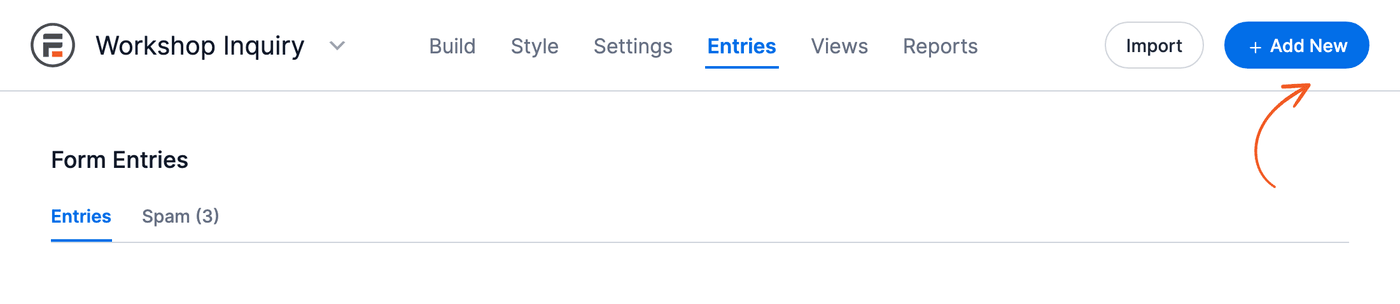
On a multipage form, click Next to go through the pages, and type the Entry Key on the last page. An Entry Key typed on an earlier page isn't kept.
If editing an entry, you can add a new entry by going to the Entry Actions sidebar and clicking Add Entry.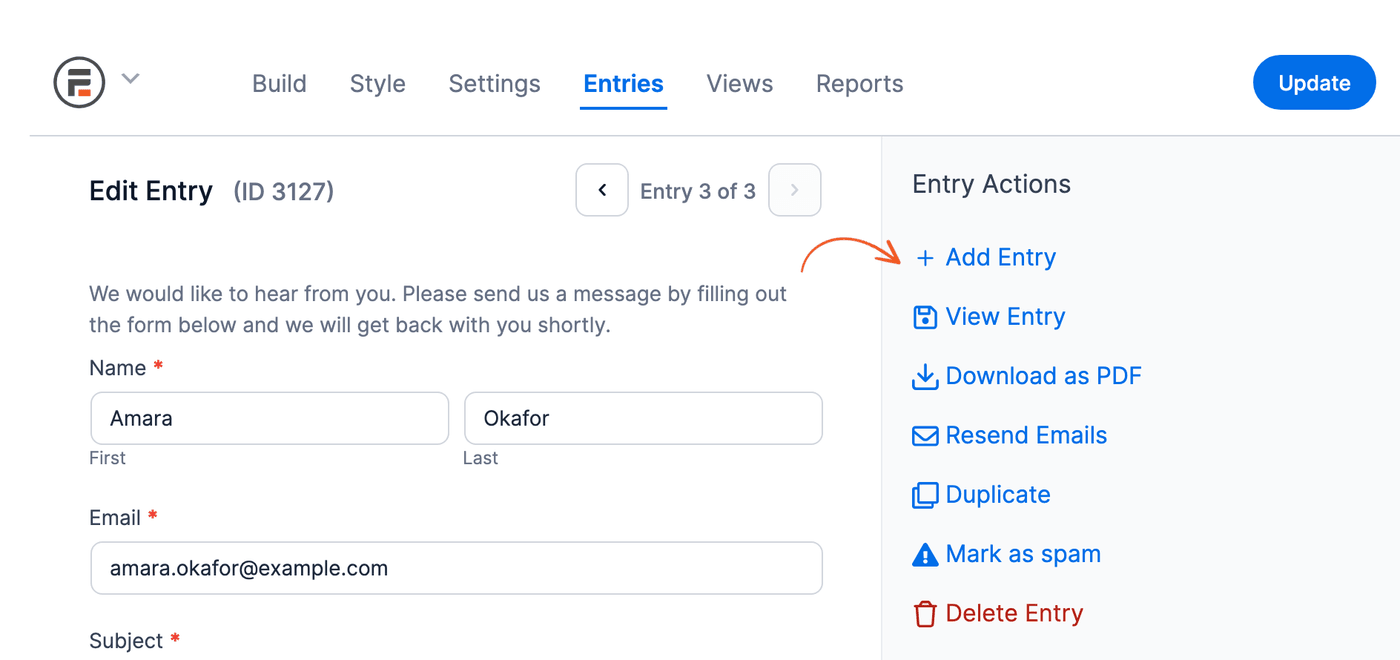
From Idea to Reality in Minutes. Build Powerful Forms, Dashboards, Apps and More.
Formidable Forms makes advanced site building simple. Launch forms, directories, dashboards, and custom WordPress apps faster than ever before.
Customize the Entries Screen
This page works very much like the WordPress post listing pages where you can show or hide field columns on the entry listing page. Select the Screen Options tab at the bottom right of the page to customize which columns are shown. The options open at the top of the page.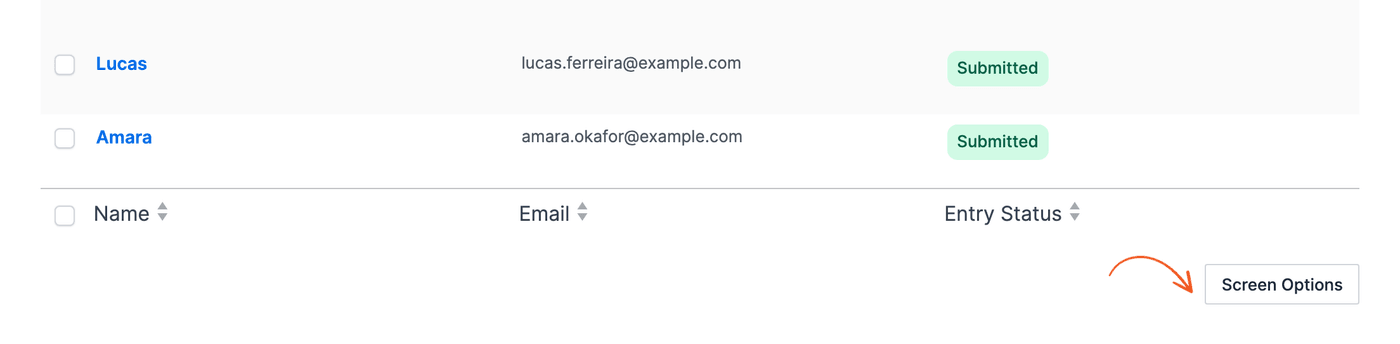
Entry Status
Within this section, you will find a column that showcases the status associated with each entry. The default entry statuses are Submitted, Draft, and Spam. Spam entries are only listed on the Spam tab.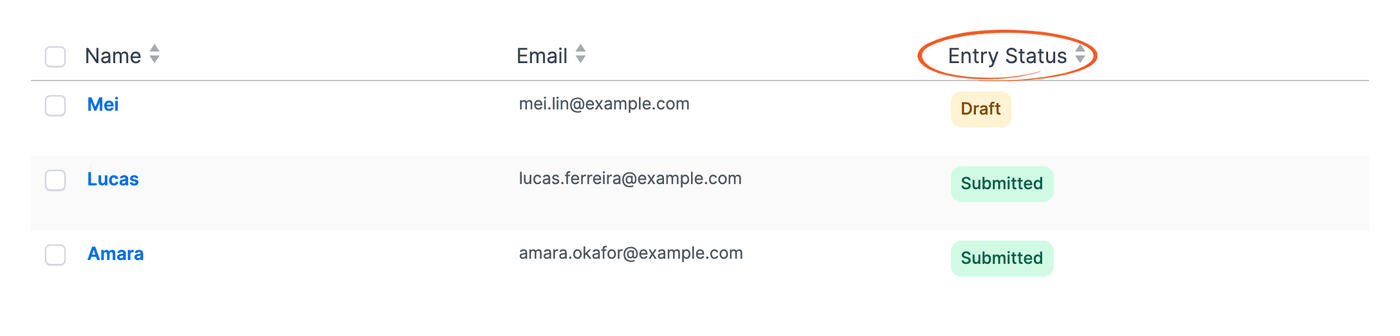
Spam entries
Submissions that a spam check saves as spam don't appear on the Entries tab. They're kept on the separate Spam tab, hidden from Views and other entry lists, and their form actions don't run. Keeping them lets you recover a real submission that a spam check flagged by mistake.
- On the Entries page, click the Spam tab next to Entries. The number in parentheses is how many spam entries there are.
- Check the Spam reason column to see which spam check flagged each entry. Entries you marked as spam yourself show Manual review.

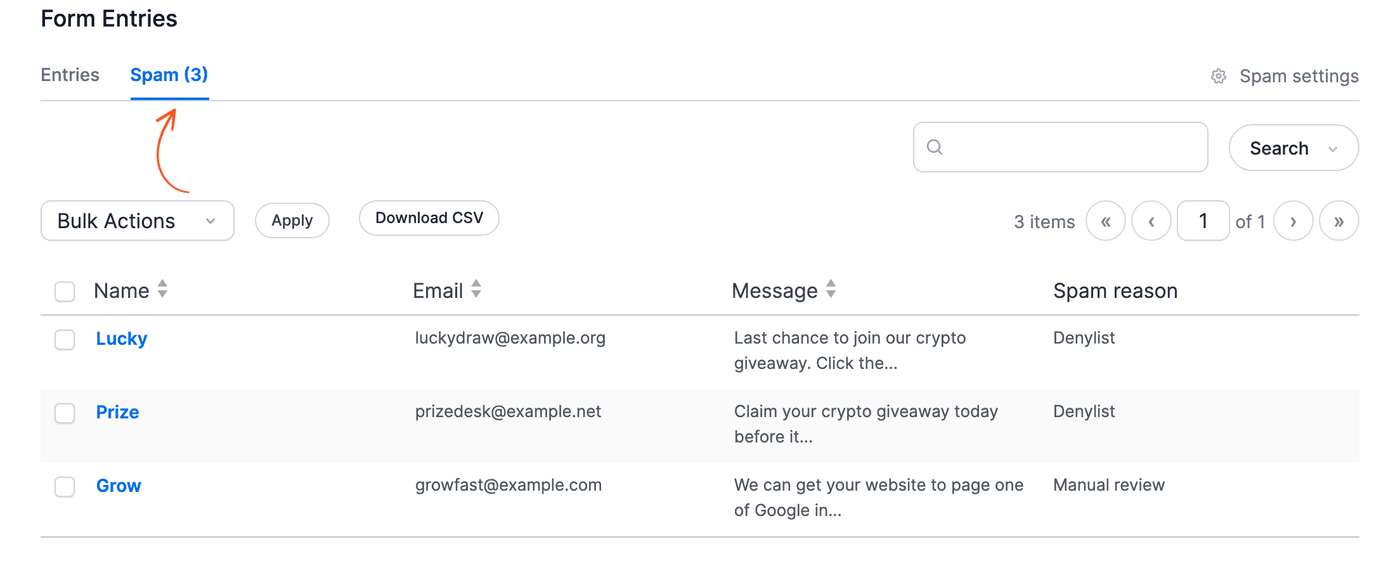
Click Spam settings on the Spam tab to open the form's spam settings. When you view entries from all forms, it opens the global spam settings instead. Learn more about how to review spam entries.
Mark an entry as spam or not spam
To move a submitted entry to the Spam tab, hover over it on the Entries tab and click Mark as spam. When you view or edit an entry, you can also click Mark as spam in the Entry Actions sidebar. Form actions that already ran for the entry aren't reversed.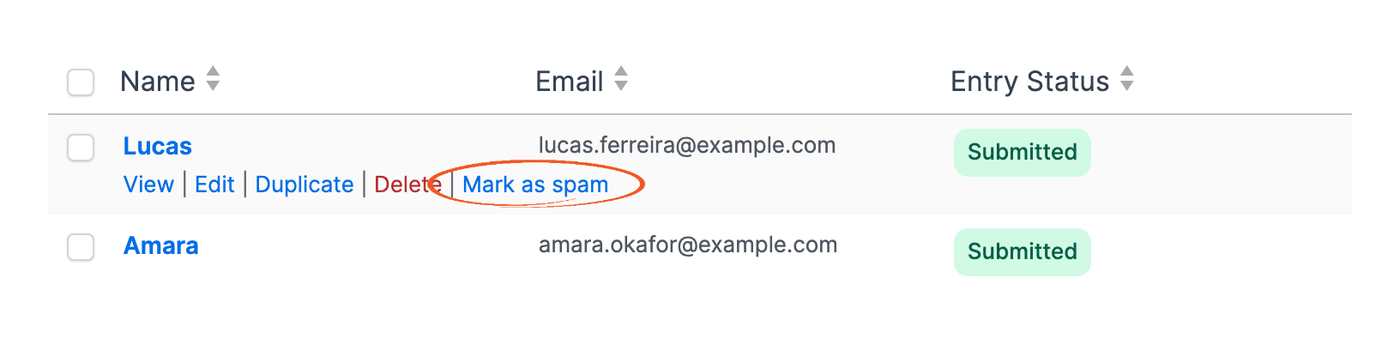
To move a spam entry back to the Entries tab:
- On the Spam tab, hover over the entry and click Not spam. When you view a spam entry, you can also click Mark as Not Spam in the sidebar.
- If the window lists form actions, check any to run now, such as an email notification. For an entry you marked as spam yourself, the window lists none and says the form actions already ran when the entry was submitted.
- Click Mark as not spam.
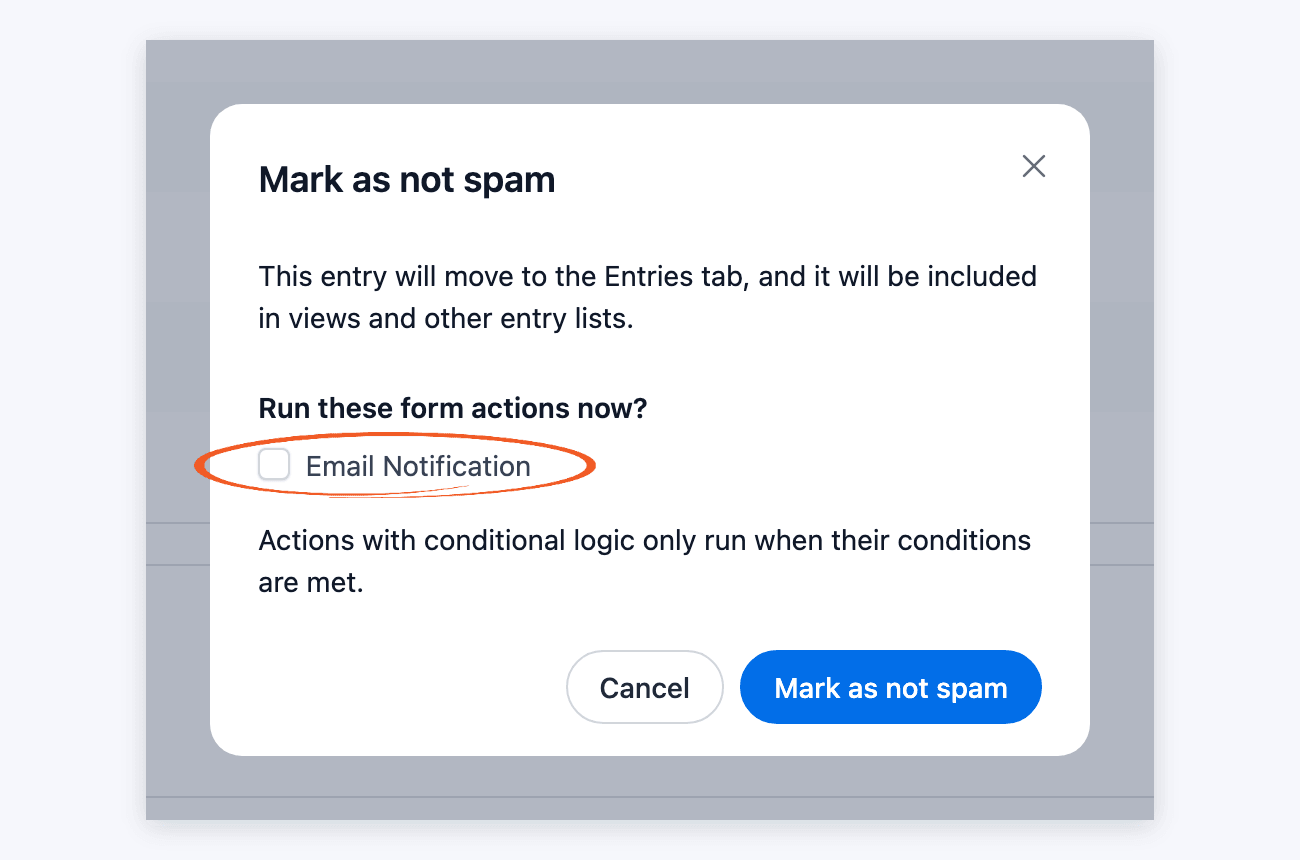
Spam entries can be viewed and deleted, but not edited or duplicated. Marking entries as spam or not spam needs the same permission as deleting entries.
With Formidable Forms Pro, spam entries are deleted automatically after 30 days by default. Learn how to change when spam entries are deleted.
Delete Entries
To delete an entry from the back-end, hover over the first column on the Entries page and select Delete.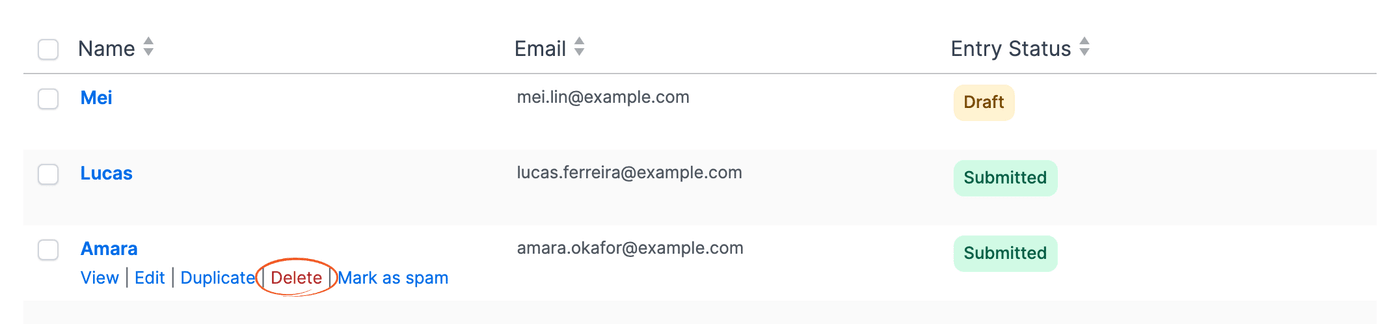
When you delete an entry with an uploaded file, this doesn't necessarily mean that the file will be automatically deleted. By default, files uploaded in a File Upload field will remain on your site indefinitely. To make sure the uploaded file is permanently deleted when an entry is deleted, enable the delete files option in the File Upload field settings.
Bulk Delete Entries
Bulk deleting entries is available on the Basic, Plus, Business, and Elite licenses.
To bulk delete entries in a form:
- Go to your form and click the Entries tab.
- Click the Delete All Entries button, which will delete all entries in the form.
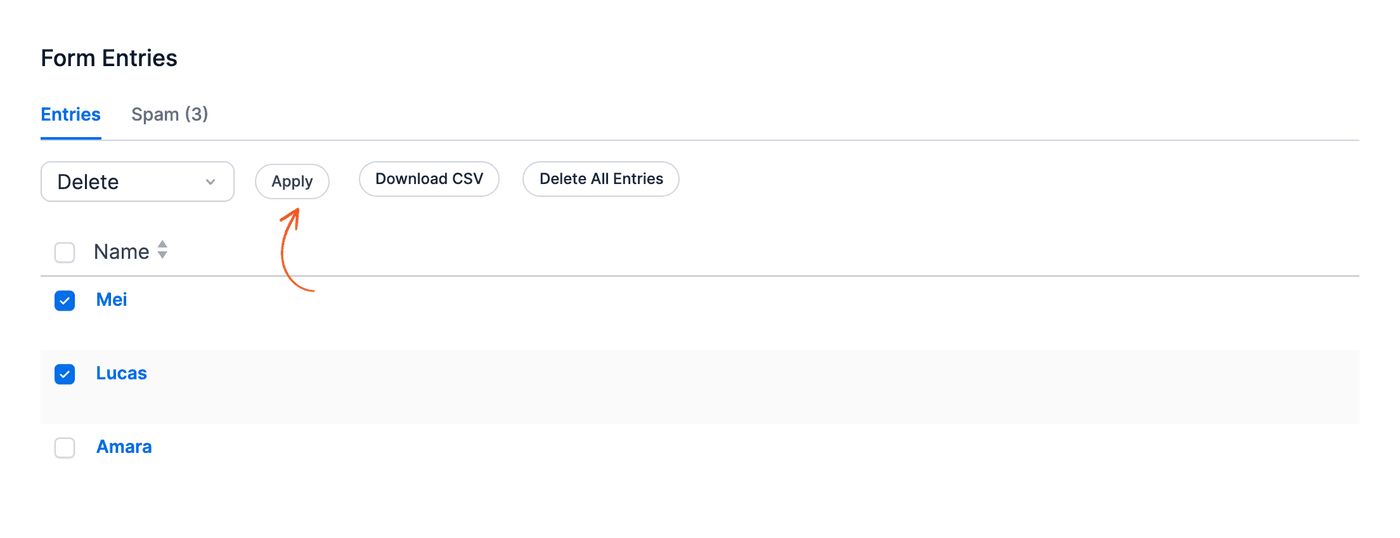
Alternatively, you can select the checkbox right next to each entry, choose Delete from the Bulk Actions dropdown, then click the Apply button. - A popup message will appear on the screen wherein you must type DELETE ALL to confirm the action. This is to make sure that entries are not accidentally deleted.
(Optional) In the Delete All Entries popup, check Trigger all actions that happen "on entry deleted". This runs the form actions set to trigger when an entry is deleted, such as an email notification, for each deleted entry. Leave it unchecked to delete the entries without running those actions. When the form has a Create Post action, these actions always run and the checkbox isn't shown. The popup for selected entries doesn't have this checkbox.
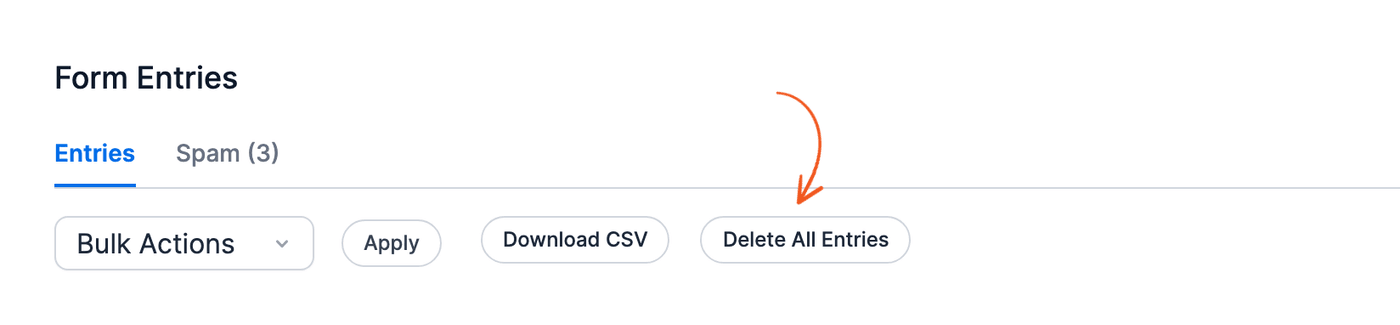
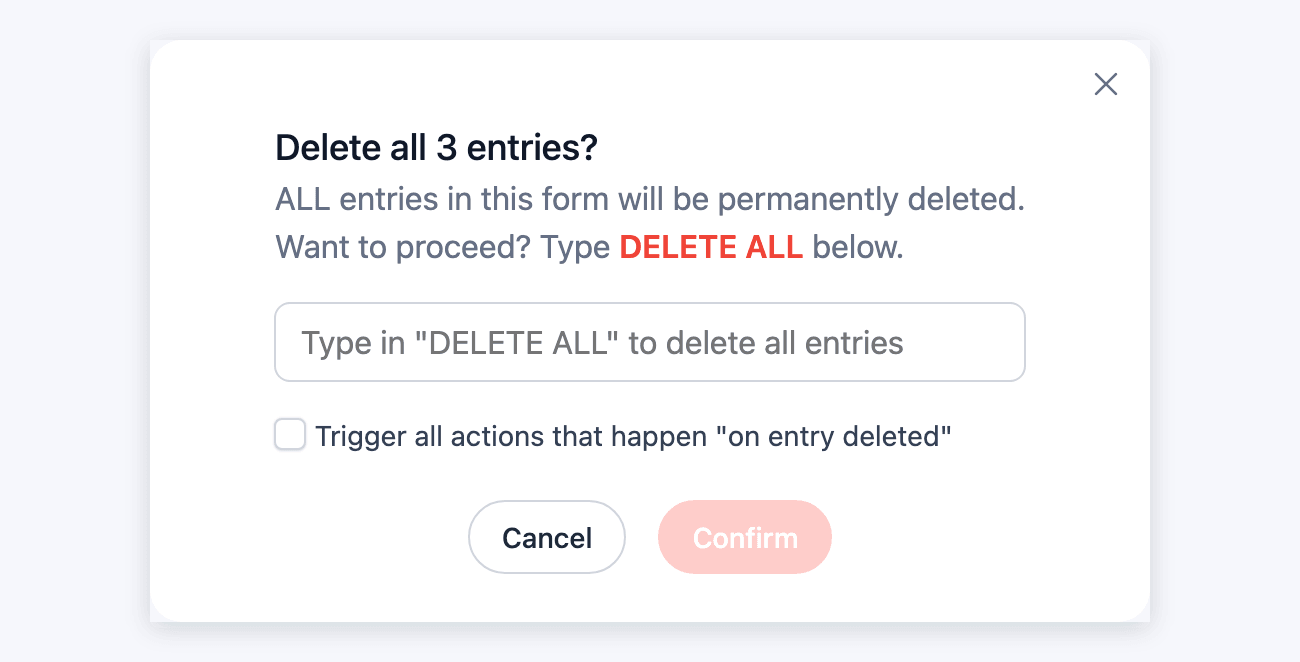
The Delete All Entries button isn't shown on the Spam tab, because it also deletes the entries outside that tab. To delete spam entries, select them and use the Bulk Actions dropdown instead.
Edit Entries
To edit an entry from the back-end, hover over the first column on the Entries page and select Edit. When you are editing an entry from the back-end, you can change any field values, including the Entry Key. When the form has a User ID field, you can change the User ID too. To edit a spam entry, mark it as not spam first.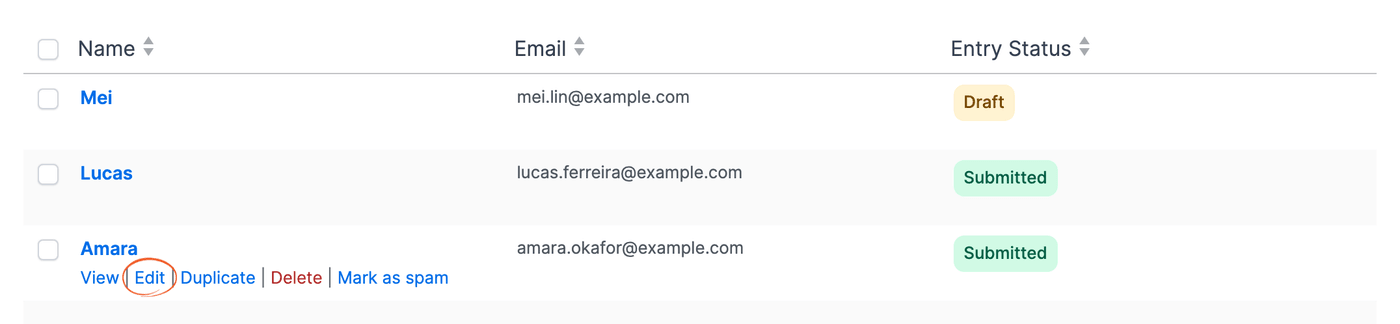
When editing an entry in a multipage form, click Save (1) to save the entry from any page. To open the previous or next entry, use the arrows next to the entry count (2).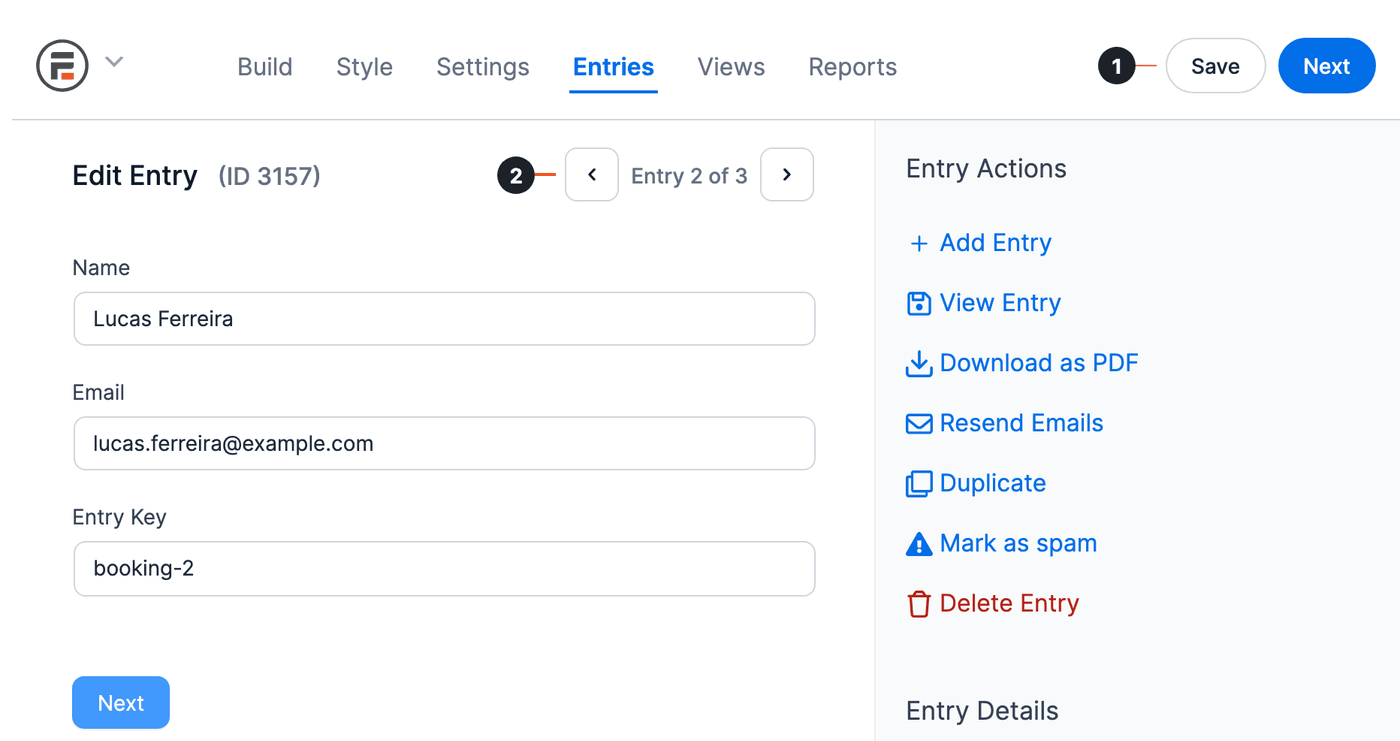
Print Entries
A benefit of printing an entry from the back-end of your site is that it will not print everything you see on the webpage. It prints only the information that belongs to your form entry. For front-end printing, learn more about how to style WordPress form submissions for print.
To print an entry from the back-end:
- Go to the form you want to print entries from.
- Click the Entries tab.
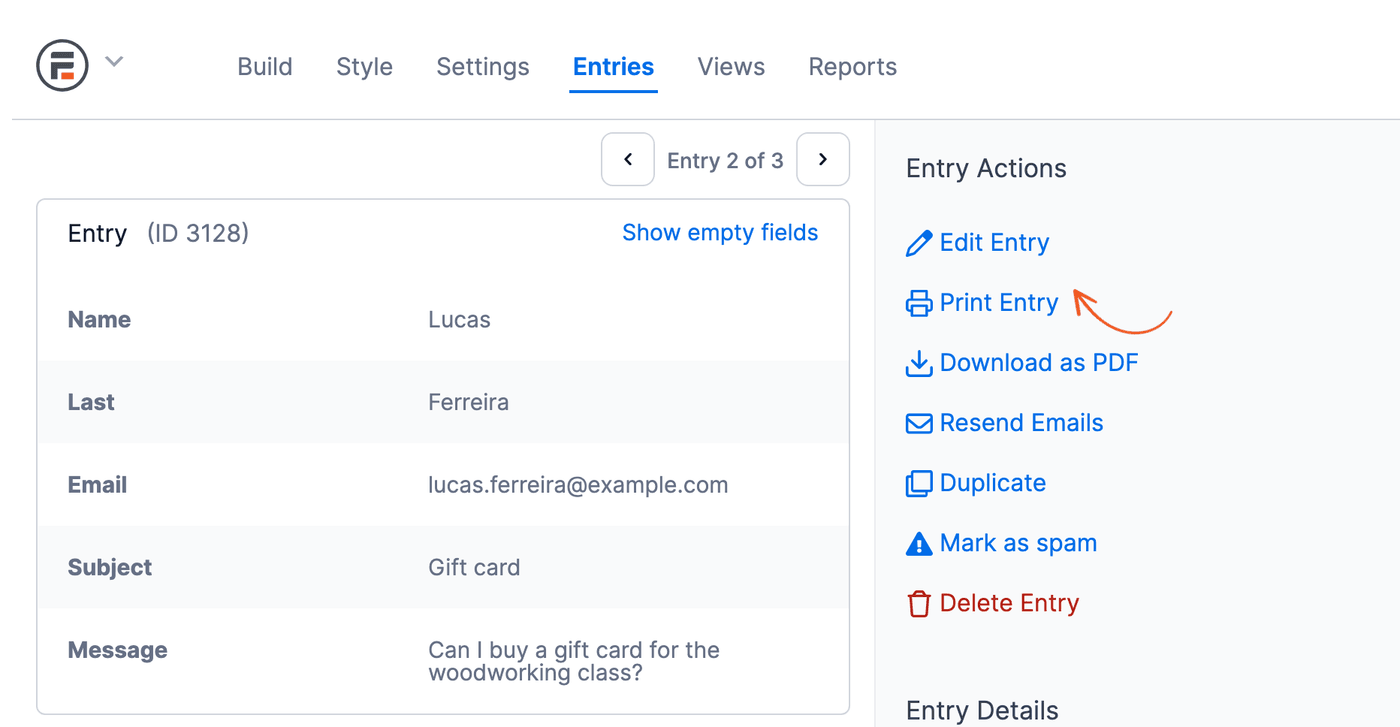
- Click View on the entry you want to print.
- Click Print Entry in the Entry Actions box.
Search Entries
The entries listing page for a specific form includes a box to search the entries. Searching with or without a field selected may return different results on some forms.
To search the entries:
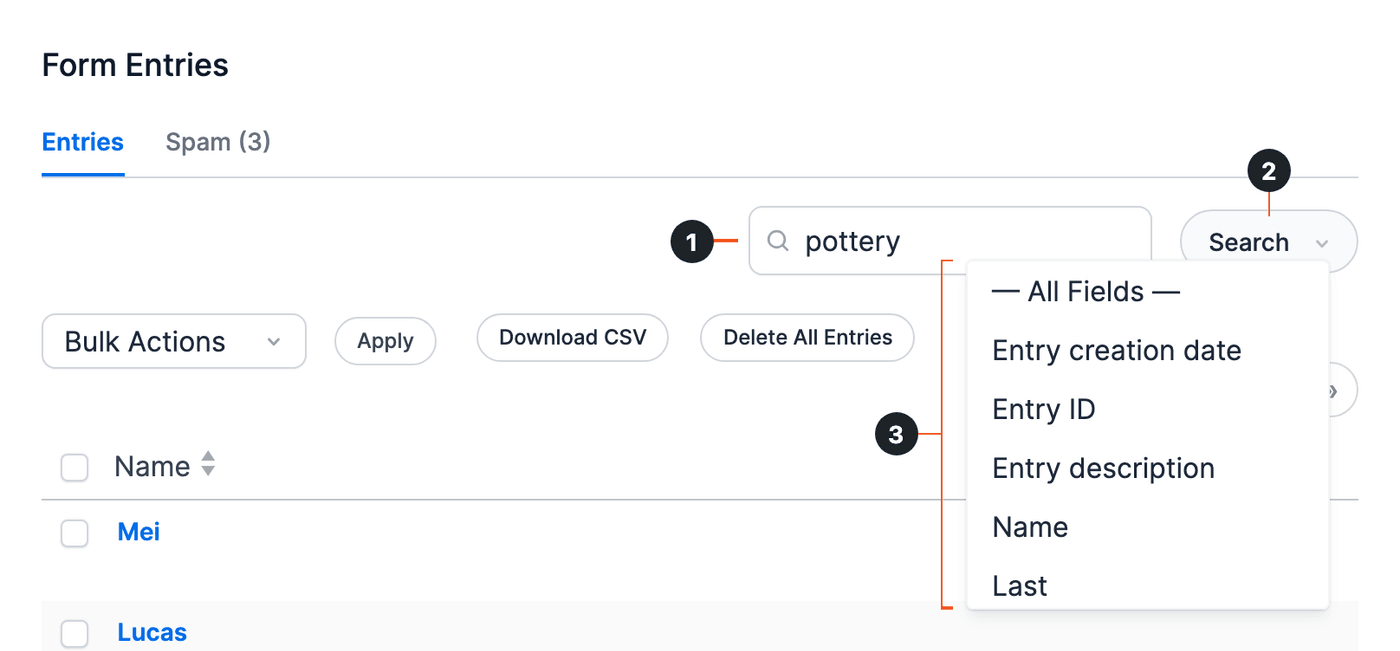
- Type a search term in the search box.
- Click Search. A menu opens.
- Choose where to search: All Fields, Entry creation date, Entry ID, Entry description, or one of the form's fields. The search runs when you choose an item.
After a search, the results can be exported to a CSV using the Download CSV button above the entries table.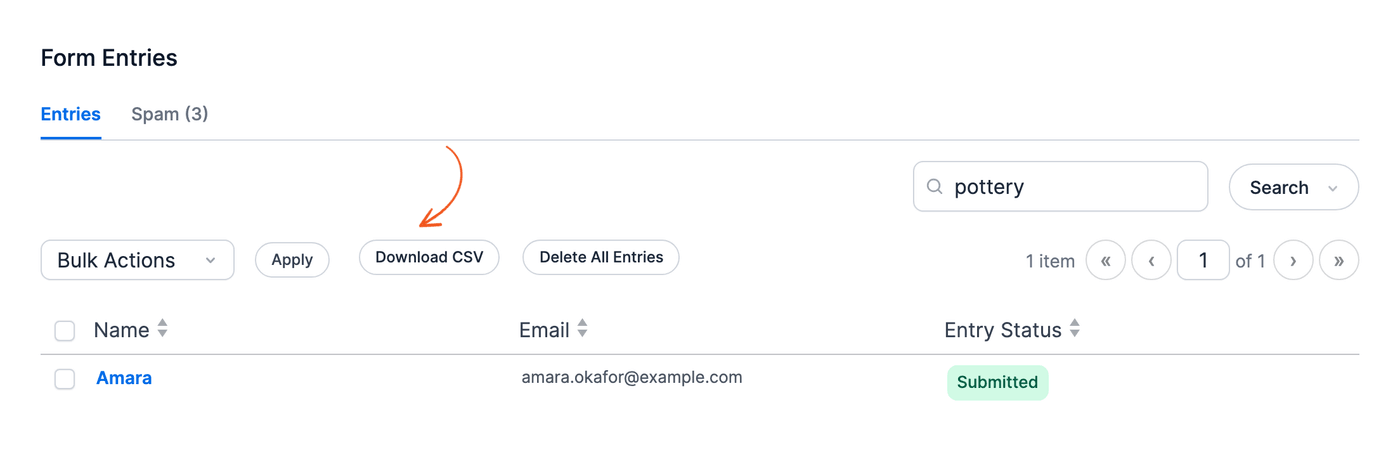
- Entry creation date: Search by entry creation date to get a list of entries created in a specific month or on a specific day. The dates are matched in your site's timezone, set on the WordPress Settings → General page. When searching by Entry Creation Date or a Date field, use the YYYY-MM-DD format.
- To search entries created during January 2017, type 2017-01 into the search box.
- To search entries created on January 5th, 2017, type 2017-01-05 into the search box.
- User ID: Select the user ID field to search for a user email or login name.
- A post field: When a field is not selected, the title and post content for any linked posts will be searched. To search values in a custom field, select the field for the search.
- A dynamic field: Select the dynamic field to search for a value rather than the id of the linked entry.
Store Entries
Formidable data, including entries, are stored in the WordPress database.
A great way to know about the Formidable data in the database is to open up your WordPress database and look at the different tables. From there, you can view the data and see how it all works. Read more about the Formidable database schema.
The security will depend on how you set it up and your web host. If you have international (EU) clients, read more about how Formidable handles the GDPR requirements.
Who can see your entries
Entries aren't shown on your site unless you display them on a page, post, or widget. For example, a View or an entry shortcode displays them.
Search engines see the same pages as a logged-out visitor. So entries appear in search results only when they're on a page anyone can open without logging in.
Uploaded files work differently. Anyone with a file's link can open it. Search engines can index it too. To block direct links to uploaded files, turn on Protect all files uploaded in this form in the form's Settings → Form Permissions.
New Views are private. A private View's own link (/frm_display/view-key/) opens only for users who can edit Views, which are Administrators by default.
A public View's own link opens for anyone. WordPress also lists it in your site's sitemap.
A View's visibility is in its Quick Edit settings. In your WordPress admin, go to Formidable → Views, hover over the View and click Quick Edit. The Private box is checked for a private View.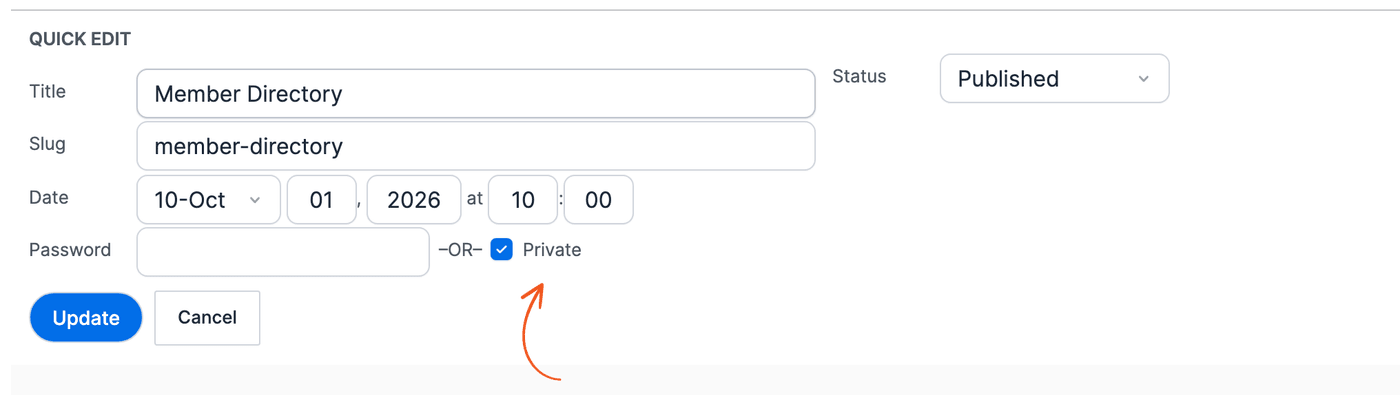
A private View still shows its entries when you add it to a page. Anyone who can open that page sees them. To limit who sees a View's entries:
- In the WordPress editor, set the page's Status to Private. A private page opens only for logged-in Editors and Administrators. To use a password instead, keep the status Published and check Password protected.
- Enter a password in the View's Password box in Quick Edit. Visitors then see a password form instead of the entries, wherever the View is shown.
- Show each logged-in user only their own entries: filter the View by the current user. The form needs a User ID field. Logged-out visitors then see no entries.
View Entries
To view an entry from the back end, hover over the first column on the Entries page and select View.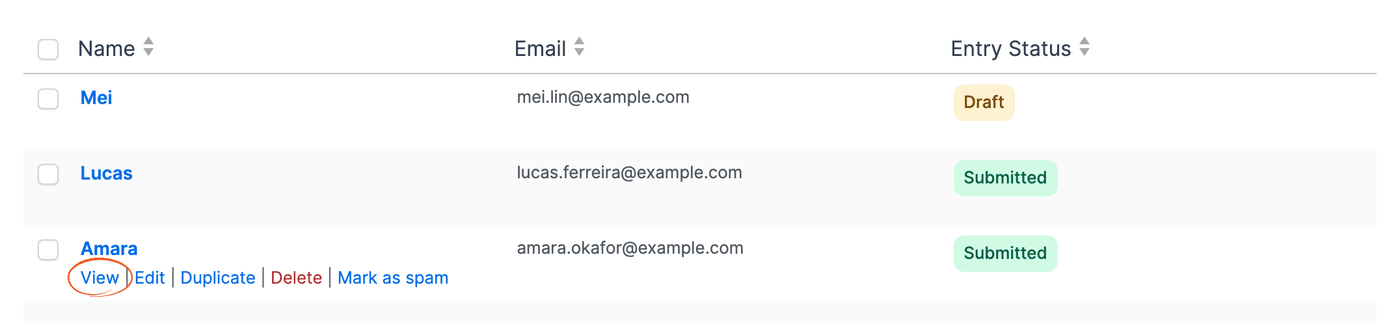
The entry opens. To go to the previous or next entry, use the arrows next to the entry count, such as Entry 2 of 3.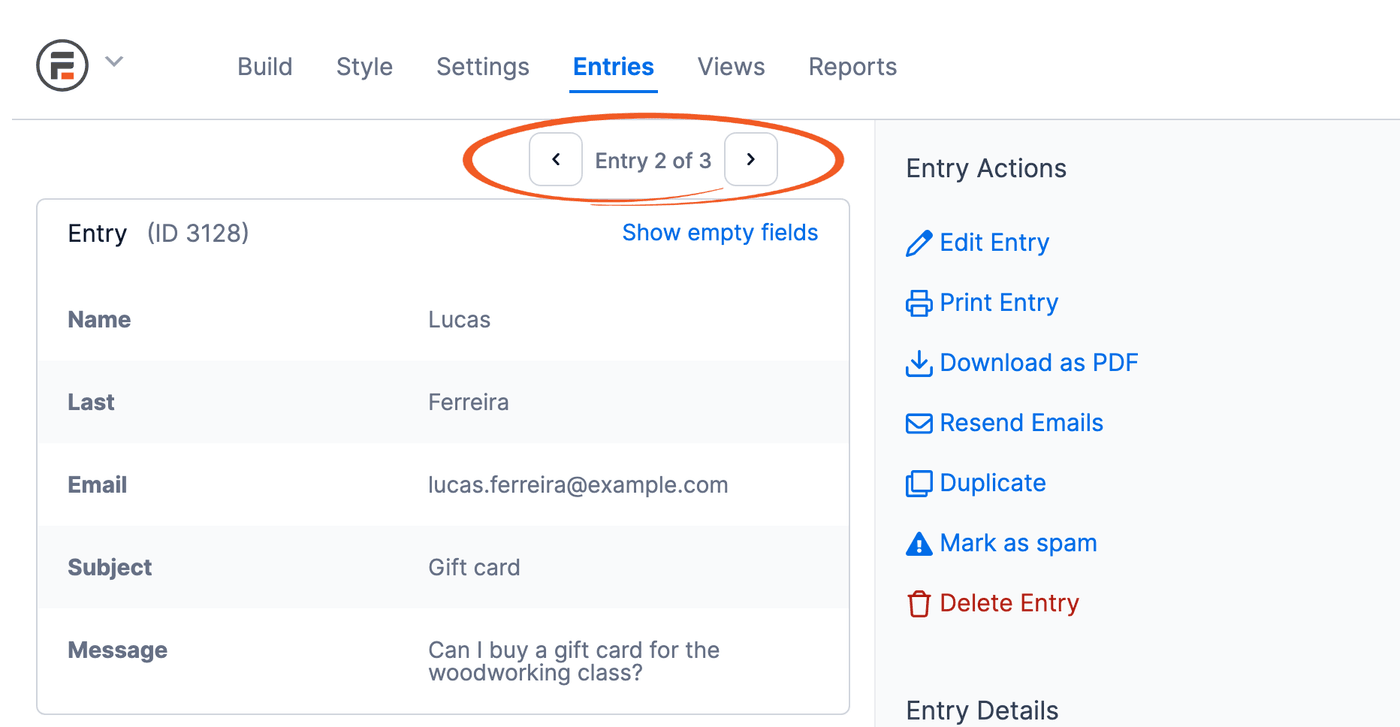
See entry creation timestamp
Each entry automatically includes a timestamp when it was created. This entry creation date will be saved in UTC time, and displayed in the timezone and format selected on your WordPress Settings → General page.
Comments/Notes
When viewing an entry on the back-end admin area, you will be given an option to add a note or comment. These notes and comments can only be added and viewed on the back-end by anyone with access to view entries on the back-end. They cannot be edited once they are created. To add one, click + Add Note/Comment (1), type your note in the Comment/Note box (2), and click Submit (3). The comment appears in the box, above the button for a new one.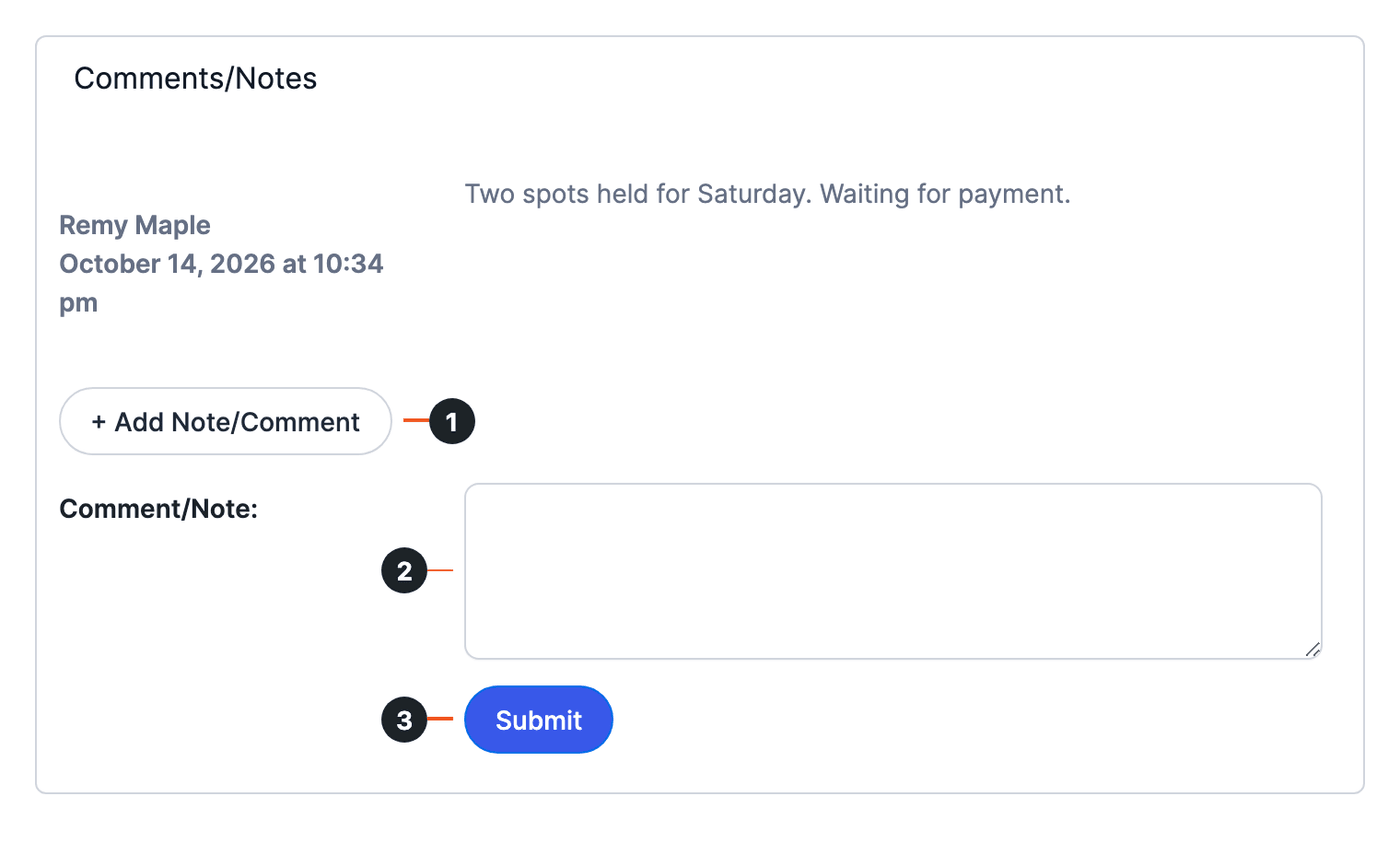
View Reports
Get an overview of the submitted form entries with the Reports page. It includes reports such as the responses over time using a line graph, total submissions using a table chart, and the entry count. Whenever a new entry is added or edited, the report is automatically updated. It ensures that the results are always current and reliable, regardless of the number of entries.
Filtering by date
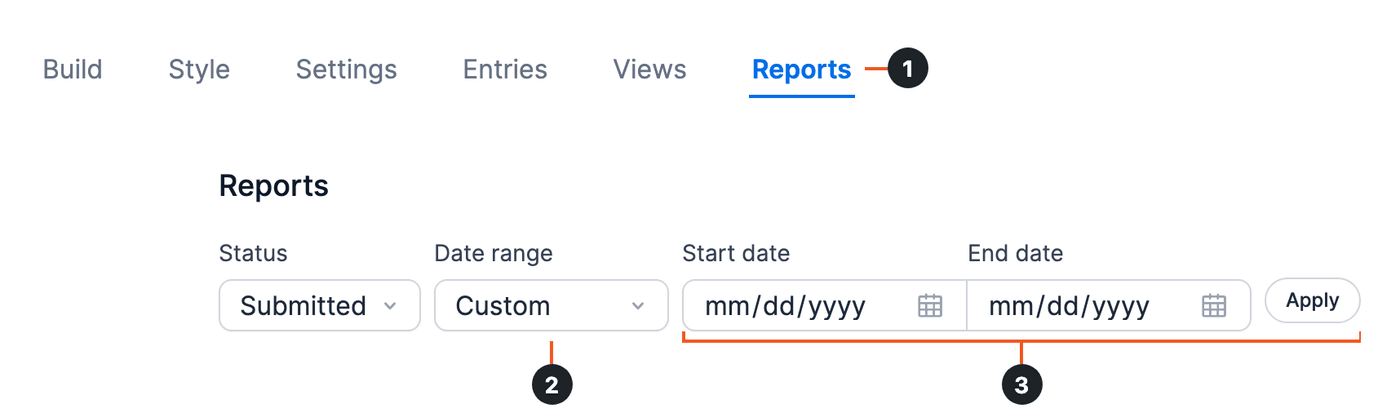
On the Reports page, you can display entries collected within a specific date range. Choose a preset in the Date range dropdown: All Time, Today, Yesterday, This week, Last week, Last 30 days, Last month, This quarter, Last quarter, This year, or Last year. Or choose Custom. To filter it with a custom date range:
- Go to your form and click the Reports tab (1). The tab appears once the form has entries.
- In the Date range dropdown (2), select Custom.
- Select the Start and End dates in the datepicker calendar (3). Then click the Apply button.